Thursday, May 15, 2008

Edwin Hubble and stuff notes


Edwin Hubble (wasn't a baddy!)
Born November 20th, 1889 he was an American astronomer. (NOT BRITISH, THAT POSER!) Responsible for radically changing the way astronomers viewed the universe- extending it far beyond the boundaries of the Milky Way galaxy. Not only this, but the fact that the universe was/is still expanding- named in his honor, Hubble's Law. (The farther away galaxies are, the more red-shifted in spectrum they become: indicating that the further away galaxies are, the faster their speed in moving away.) This not only established a universe outside our own galaxy, which we had previously considered to be the universe in its entirety- this allowed us to assume the age of our "newly"expanded universe.
Physically able as a young man, he did well in all classes except for spelling (lol). He attended the University of Chicago and focused primarily on mathematics, astronomy and philosophy; receiving a BS degree in the year 1910. (Ended up in the Kappa Sigma fraternity, and in 1948 was awarded the title Kappa Sigma Man of the Year.)
He then went on to spend time at Oxford as one of the first Rhodes scholars, and while there focused attention on studying Jurisprudence, but eventually transferring to Spanish, receiving a Master of Arts degree. It was this period of time that he picked up his English/poser attitudes and habits, which remained with him throughout his life.
From this point in time, several things in his life occurred that kept him out of astronomy- he taught and coached basketball at a high school in Indiana - New Albany High School. He also was registered withe the Kentucky Bar, however he did not spend long in the field of law before serving in WWI, where he earned the rank of major. After the war, he returned to the University of Chicago to earn is PhD in Astronomy in 1917, while working at the Yerkes Observatory. (Interestingly, his dissertation was- "Photographic Investigations of Faint Nebulae".) Two years later, Hubble was offered a job at the Mount Wilson Observatory by George Ellory Hale. (wooooo!) It was here and at the US Army Aberdeen Proving Ground (Palomar) that Hubble remained working at until his death. [Also important to note that Hubble received the Legion of Merit for his work at Palomar.]
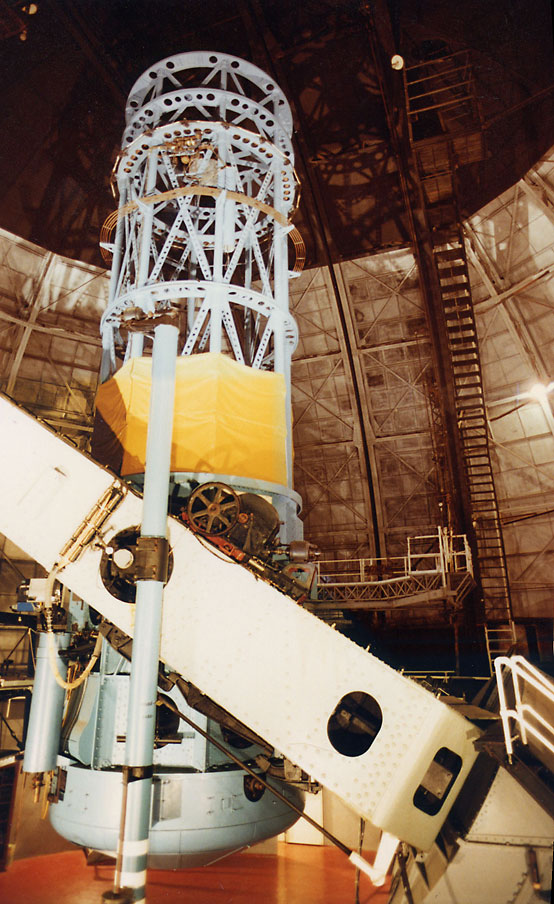
Hubble's arrival at Mount Wilson was roughly in sync with the completion of the Hooker Telescope (shown at the top right of the page, because this website sucks and won't put pictures in the body of text apparently!)- aforementioned in George Ellery Hale's name. Using this 100 inch reflecting telescope- Hubble captured and studied Cepheid Variables/Standard Candle stars- noting their are galaxies outside our own.
It is not surprising then that he should develop a system of classification for these newfound galaxies- and he did just that. Known to us today as Hubble's Tuning Fork/Hubble Sequence, it classified galaxies by size, shape, color, and brightness. It was at this point in time that he noted the redshift phenomenon, Hubble's Law. It is important to note that Hubble's Many Galaxy thought process was strongly opposed by the scientific community -(damn you, Shapley!) never fear, however! His further observations proved conclusively in the early 1920s that the scale of the universe was far greater than we had previously imagined. (EAT IT, SHAPLEY! HA!)

Friday, May 9, 2008

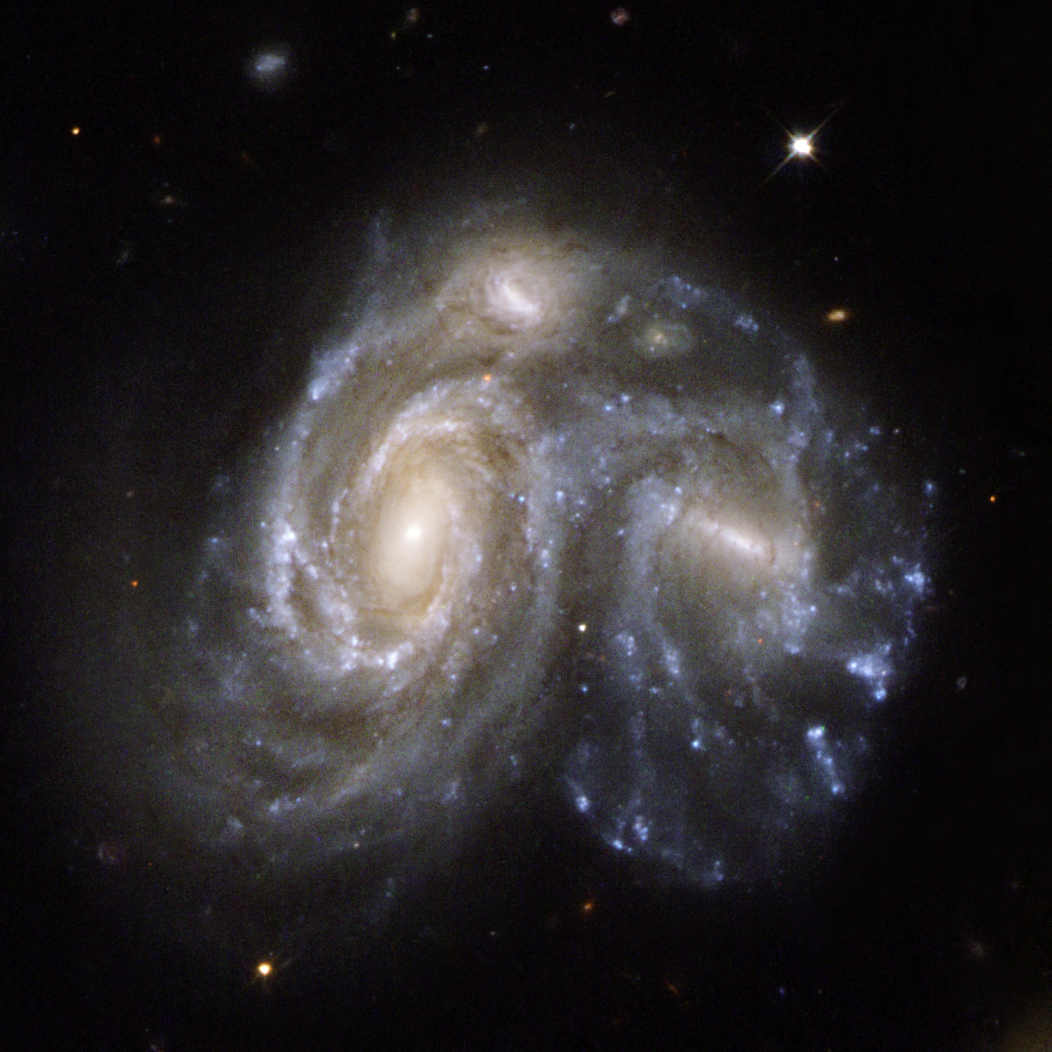
GALAXIES COLLIDE~ 4.05- Retro!


Linking Spiral Arms, two large colliding galaxies are shown here in this Hubble image. (Hubble ftw.) It is important to note that the galaxies shown are listed in Halton Arp's atlas of Peculiar Galaxies! (Arp 272!) Together, the two are approximately 450 million light years in the Hercules Galaxy Cluster.

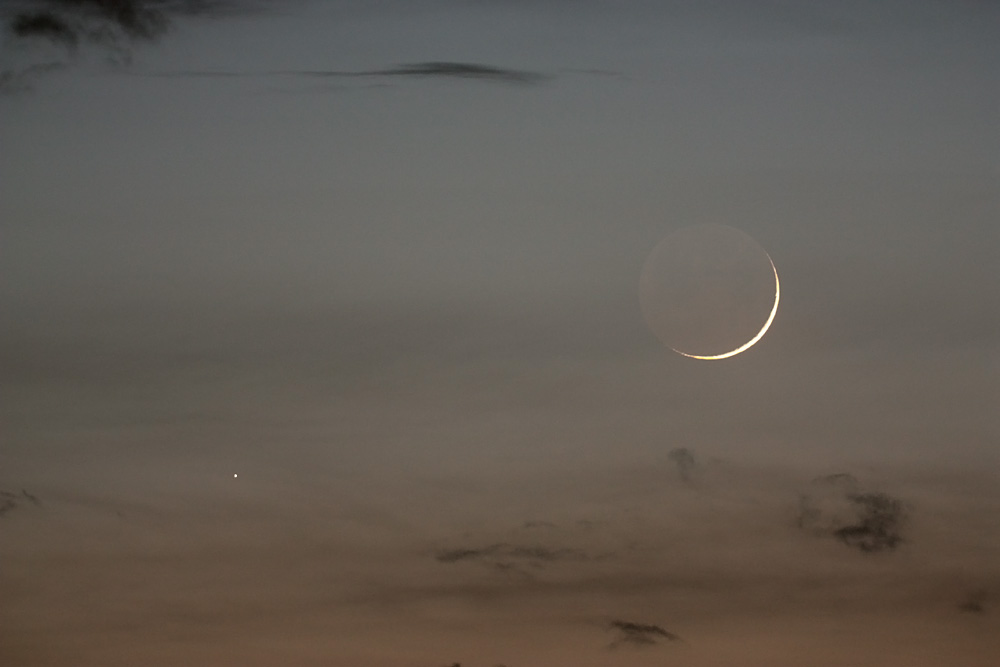
4.06 (MOON MEETS MERCURY!) Relationship inc?


Tuesday, May 6th. The day that the Moon first met your mother. (Mercury.) Here, we see an "arresting skyscape" (BDSM?) showing the apparently close proximity of the two. This week has been a good one to play peeping tom on Mercury and the Moon. Also available in this picture, one may see the majority of the moon through Earthshine- "cradled in the lunar crescent."

Innuendo abound!

Friday, April 18, 2008

4.SHREE

Protected night shkies- fact or ficshion? In thish cashe, it ish true! April 15th(sh) marksh the 50th(sh) anniversary of the firsht lighting ordinance which reshtricted search light advertishments from shweeping the night shky above flagshtaff Arizona. Becaushe of thish, Flagstaff is the firsht Internashional Dark Cshity. Hooraysh!

Friday, April 11, 2008

4.02


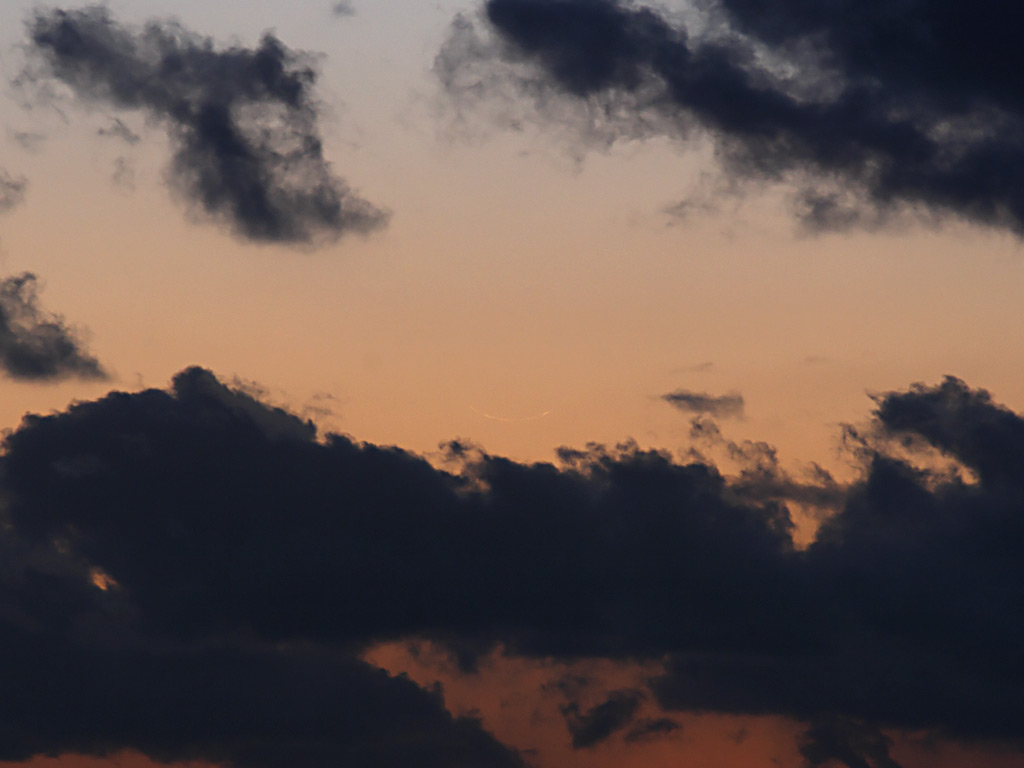
No, there's no fancy pancy title to this- I just bombed a constellation quiz :( Time to break out the flash cards and actually learn them I guess. Anyways. THE MOON DUN BLEW UP!!! IT'S NOT IN THE PICTURE!!!
SEE?!?!?!
No it's actually there- it's just a tiny itsy bitsy crescent! How CrAzY is that! Apparently the moon was only 15 hours old- however this has to be false! (I saw the moon a few weeks ago!) But you can't argue with "Big Science" according to Rush Limbaugh.

Tuesday, March 18, 2008

Biography... Whut?

I finally posted a biography!Living from 1868 to 1938, George Ellery Hale began studying astronomy as a wealthy teenager as he grew up in the city of Chicago. He did his undergraduate work at MIT (eventually earning a B.A., the highest degree he would ever hold) where he developed the spectroheliograph. From there, he worked in the private Kenwood Observatory until he left for the University of Chicago. While at U.C. he built its observatory, the Yerkes, along with its 40 inch refracting telescope, which at the time was the largest working telescope.

To his name and credit, he also founded the Astrophysical Journal, (coining the term astrophysics as well) he was awarded the Janssen Medal by the Paris Academy of Sciences in 1894 and the Rumford Medal by the American Academy of Arts and Sciences in 1902, he received the Gold Medal from the Royal Astronomical Society in 1904 and the Draper Medal from the National Academy of Sciences. On top of this massive list of accomplishments, he was also one of the first three Honorary Members of the Optical Society of America, and he won the Ives medal in 1935. He is also accredited with winning the Actonian Prize, and Copley Medal.

Hale was a driving force behind the Palomar Observatory (now owned by CIT) that allowed the Hale Telescope to be built, a 200 inch (5.1m) telescope. As described by Caltech Astronomy: “The 200-inch (5.1 m) Hale Telescope (f/3.3) was the world's largest effective telescope for 45 years (1948 - 1993). It is still a workhorse of modern astronomy. It is used nightly for a wide range of astronomical studies. On average the weather allows for at least some data collection about 290 nights a year.”

A massively influential figure in astronomy- he currently has a telescope, (aforementioned Hale Telescope at Palomar) a 22-year solar cycle, (Hale Cycle) an asteroid, (Asteroid 1024 Hale) as well as craters on both the moon and Mars named after him. He was arguably one of the most influential/productive Astronomers of all time, let alone in his period.

Friday, March 14, 2008

3.10 STIRKES AGAIN, LOLOLOLOLOLOLOLOLOL.

Planets Align Over Aussie Radio Telescope Array~
Mercury, Venus and the Moon are shown over this telescope array in Aussieland, aka the world ruled by Kangaroos. (Narrabri in New South Wales.) March 6th, Mercury is the highest and brightest. Which makes it the best.